Obligation Given Capability
A philosophical argument of why Good Will Hunting and Spider-Man disagree.
Imagine if we knew that a certain baby being born tomorrow had a 100% chance of ending world hunger. Let’s abstract away any questions of how we know this or what steps have to be taken to achieve this outcome; let’s just assume there is an omniscient being who gave us this fact. They told us that this result would only be realized if the baby decided to dedicate their entire life towards this mission. If we knew this for certain, the question is whether the baby has a moral obligation to the mission they are guaranteed to succeed at. The resounding answer is yes, right?
One of my favorite films of all time is Good Will Hunting (1997), which follows Will, a polymath with genius-level intelligence who is a janitor at MIT.1 The film’s central tension is whether Will should operationalize his talent to benefit himself and the world, or keep living as a poor man, getting drunk with his friends. At the end of the film, he turns down a job that would presumably set him and his friends financially free, choosing instead to drive across the country to go see about a girl. If he had an obligation to end world hunger, he definitely didn’t fulfill it.
 https://www.sothebys.com/en/articles/robin-williamss-prized-memento-from-good-will-hunting
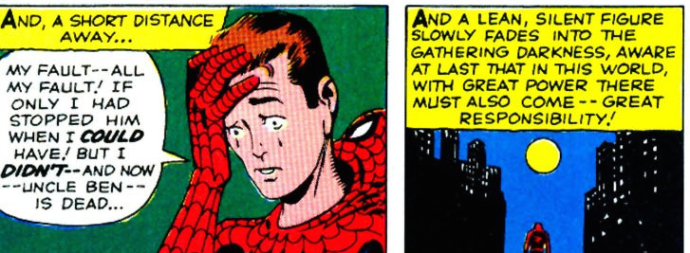
In a 2023 Founders Fund essay titled “Choose Good Quests”, Trae Stephens and Markie Wagner provide a different perspective: “if you are an exceptionally capable person, failure to pursue a good quest is not neutral. It constitutes a loss for humanity.”2 They then illustrate what a good quest looks like: “semiconductor manufacturing, complex industrial automation, natural resource discovery.” Our baby’s ending world hunger fits the same description. Similarly, as Spider-Man says, “with great power there most also come great responsibility.”
 https://womenwriteaboutcomics.com/2018/08/great-power-verbs-great-responsibility/
A moral obligation is a duty, but it is determined by a moral framework that assigns value to an action. What our question with the unborn baby is really asking is whether the capability to do good generates an obligation to do good. I believe that it does not. This follows from my belief that there exists an act-omission distinction, which means there is a difference between performing an action and the omission to perform one.3 The implication is that in any moral dilemma, one can always preserve moral neutrality by putting down the controller and saying “I’m not playing.”
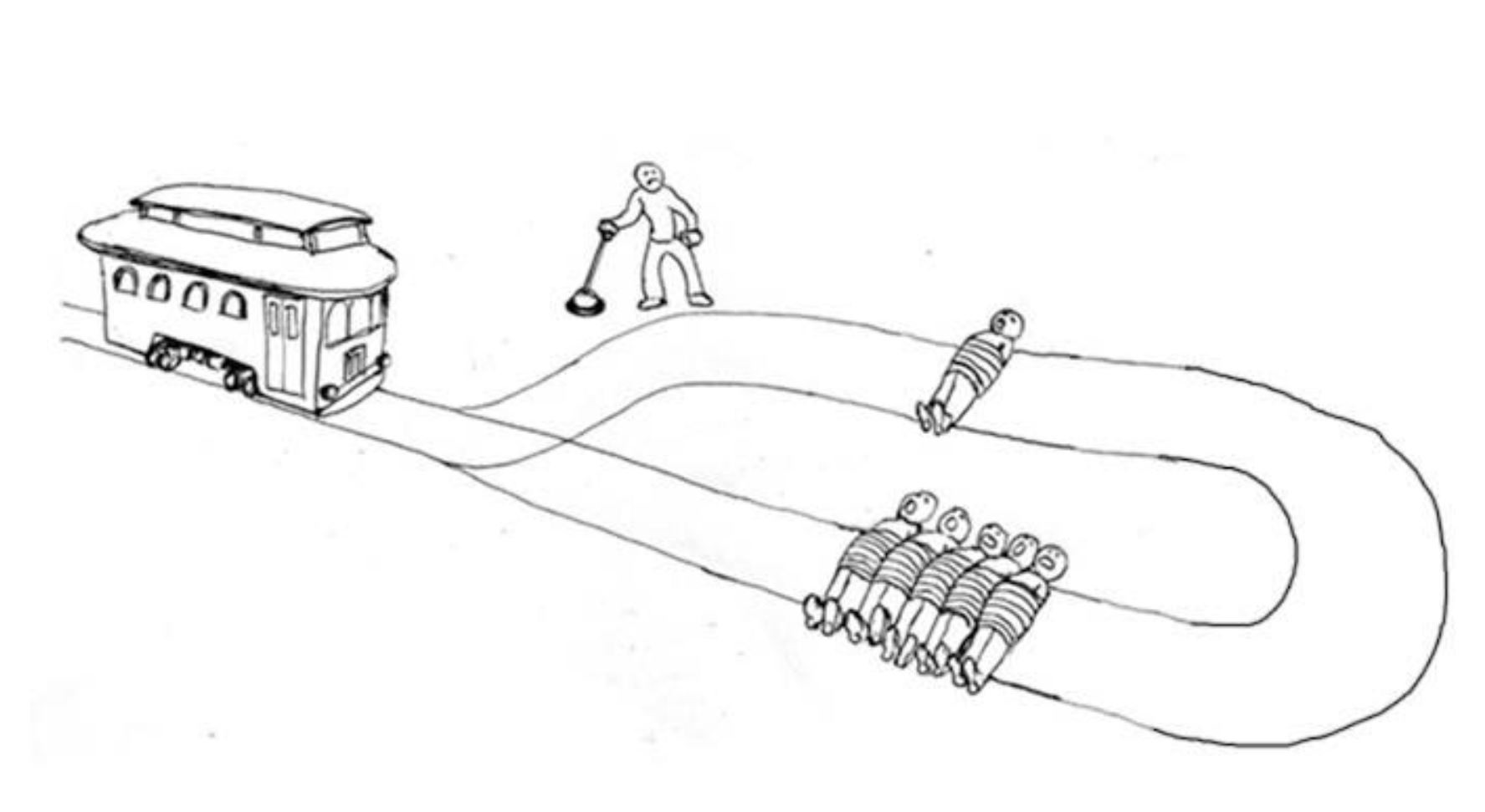
In the trolley problem, a runaway trolley will kill five people tied to the tracks unless you pull a lever to divert it onto a side track, where it will kill one. Assuming a utilitarian world, if you were the actor and believed there was no act-omission distinction, you would pull the lever to kill the one person, since one death is better than five deaths. If you believed there was an act-omission distinction, you’d look the other way. The five would die and the one would be saved. You didn’t tie the five to the tracks and didn’t perform any action that led to their deaths; you were just at the wrong place at the wrong time. That sounds horrible, but take the counterfactual where you did pull the lever and your action caused the death of a person. In that case, you’d have directly murdered someone. In the other, five people would have died indirectly, but at least you didn’t pull the trigger.
 https://thesixthformreview.wordpress.com/the-trolley-problem/
There’s a long debate about the trolley problem involving epistemic modesty (we aren’t certain the switch works) or modifiers (maybe the five are actually dolls) that we could get into. But the main reason I accept an act-omission distinction is simpler: without it, we would have infinite obligations. If the only condition needed to generate an obligation is physical capability, it would be impossible to draw a line where that obligation stops. If you can pull the lever, you should also run into every burning building to save every stranger or cure every disease that plagues the world. While that sounds noble, the consequence is that everyone simultaneously has the same infinite scope of obligations, which makes everyday action impossible.
If you wanted to go to work tomorrow, you couldn’t – you’d actually be obligated to the local soup kitchen, and concurrently obligated to stop deforestation in the Amazon rainforest. This sounds like utopian morality, a world where everyone capable is doing something great. But to me, it’s not clear that a world where no one is allowed to say no to an obligation can even function. There are real reasons why you might have a greater obligation to your family, or even to yourself that infinite obligations prevent being able to decide between. Additionally, a rule punishing every failure to help others would be impossible to enforce in any ethical framework – utilitarianism, Kantianism, contractualism – since such failures are infinite at any moment. That means the only way to non-arbitrarily limit the scope of obligations is to bind them to actions, not omissions, which implies an act-omission distinction. So, if you didn’t strap those people to the tracks, you don’t have an obligation to touch the switch.
The result is that the baby doesn’t have an obligation to end world hunger just because the baby is capable – anything else would freeze action. It is permissible for the baby to work towards fulfilling the prophecy in the same way that you could pull the lever, but permissibility is not the same thing as obligation.
But what about all the good the baby would do? Could you realistically look a starving child in the eye and tell them that this highly capable person doesn’t have an obligation to help them? This is where intent-foresight distinction comes in and kicks out act-omission distinction. This is the idea that your capability to do good in the world, or prevent harm, generates an obligation for you to do so if, and only if, you can reasonably foresee the positive impact of your action.4 It’s a way of saying that you should divert the trolley because the lever is within reach, but you don’t have to save someone from the burning building a mile away from you because you can’t see them. This is the most reasonable standard and the one most people operate under, but at the end of the day, it is arbitrary. It’s impossible to draw the line at what you can reasonably predict, and you ultimately determine your own scope of obligation. This means any selfish person can just void all obligations by saying “I didn’t foresee it”.
But if we could foresee it, like a certain prophecy about a baby’s genius capabilities, then perhaps an obligation would be generated. Maybe it would be a real disservice to the world, and it would be actively unethical to prevent the baby from putting their whole essence into their mission.
However, the reality is that we can’t know those odds for certain. If we modify the question to be that the baby has a 50% chance of ending world hunger, the moral obligation dwindles under the intent-foresight principle. Then, try 25%. Then 5%, which might eliminate the obligation entirely, since we can no longer reasonably foresee the future. Then, the odds start to look pretty familiar. Maybe everyone is born with a 1% chance of doing something extraordinary. Everyone has a chance of curing cancer or achieving world peace.

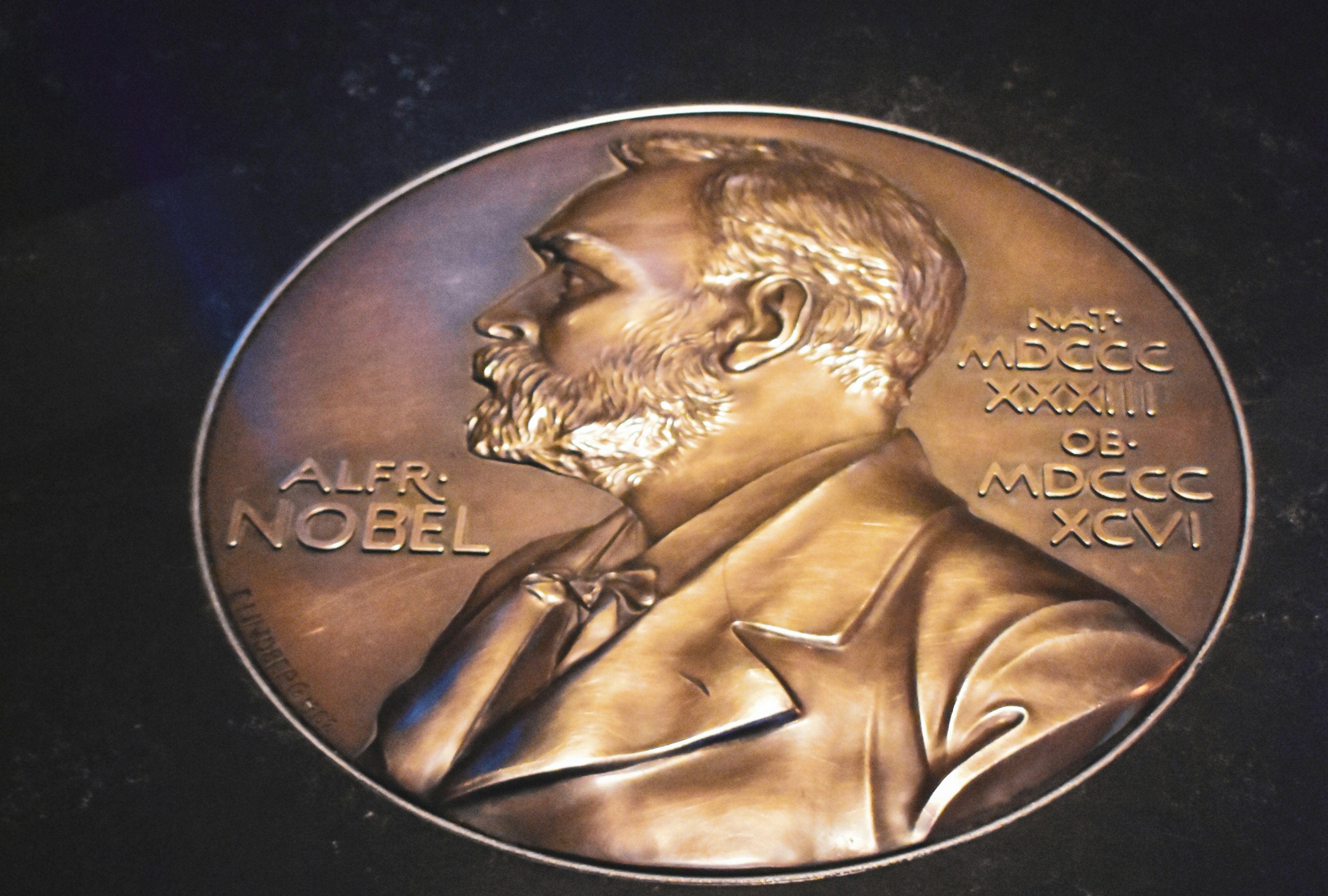
J. Robert Oppenheimer thought that the nuclear bomb would end all wars. Alfred Nobel invented dynamite to make mining safer, but the invention gave him the nickname “the merchant of death.” Maybe for them, there was a 1% chance that their life’s work would produce a utopian society and a 9% chance that it wouldn’t. The remaining 90% covers the worlds in which they weren’t so ambitious, and simply decided they didn’t have an obligation to do anything. In nine out of ten worlds, the names Oppenheimer and Nobel wouldn’t mean anything to us.
 https://unsplash.com/photos/a-coin-with-a-horse-on-it-HRPaX-7rL4Q
It is a dangerous narrative to parade around and say that obligations don’t exist, and that we shouldn’t do anything about the problems that exist in the world. It is incredibly privileged to be in a position that doesn’t warrant an immediate obligation to change your life. You should always have a goal. Learn about problems in the world and find ways to solve them. Those will always be permissible, and we live in a society where ambition is encouraged. However, many of the value systems present in big cities full of capable young people define a person’s self-worth by their obligations. People in San Francisco’s tech circles are often measured by intellectual capability and which problems they’re working on: a description of what their obligation is. Those in New York City’s finance hierarchy are usually measured by the headcount they’re obligated to manage. In those privileged spaces where the value of someone is determined by one’s obligations, it may be worth reminding them that obligations are, at the end of the day, optional. You should always be able to choose not to act.
There is a counterargument that I haven’t particularly made up my mind about. The thesis is that the second we are born on this Earth, we begin to consume resources. We breathe air, eat food, and demand attention from our parents. Model the world as a thriving ecosystem, with each being as a function of input and output. The average modern-day person takes far more input than they return, which might generate an obligation for an equivalent level of output.
Perhaps a couple thousand years ago, when humans ran around barefoot eating fruits off trees, their mere existence – contributing to the food chain and fertilizing the ground – was output enough to justify itself. But by this century, humans have already polluted the world. We’ve stripped the ground of resources, burned fossil fuels, and driven many species once part of a prosperous ecosystem to extinction. Perhaps then today, if I walked around barefoot and ate fruit for the rest of my life, it’d be irresponsible to avoid accountability for what we’ve done as a species.
I grew up just outside Boston, went to college in Atlanta, and have traveled to or worked in seven countries since adulthood. I’ve done nothing but consume at this point. As an open question to anyone reading, perhaps it’s time to question what your output will be.
 https://unsplash.com/illustrations/abstract-geometric-shapes-in-shades-of-blue-edMd9-tikC8